Marketing Script Embroidery Font: A Designer's Real-Talk Review
First Impressions and the Mood It Creates
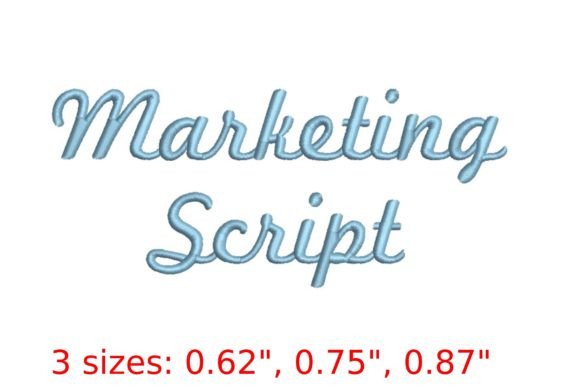
I opened the Marketing Script Embroidery Font file on a quiet Tuesday morning, coffee in hand, with a stack of blank tote bags waiting on my worktable. The first thing that hit me was how fluid and intentional the letterforms felt. This is not one of those overly loopy script fonts that looks pretty on screen but turns into a tangled mess the second your needle hits the fabric. The strokes have a restrained elegance, a kind of confident flow that immediately made me think of boutique window signage, hand-painted storefront lettering, and the kind of personalized gifts that people actually keep and use.
The mood here is polished but approachable. It carries a sophistication that would feel right at home on a linen apron for a small bakery, a monogrammed pillow cover for a wedding gift, or a custom sweatshirt for a creative entrepreneur's merchandise line. There is warmth in the curves, but also a professional crispness that tells me the digitizer understood how thread behaves on fabric.
When I mentally placed this font on a tote bag design or a custom apparel piece, I saw it clearly. The Marketing Script Embroidery Font reads as intentional design, not an afterthought. That matters immensely when you are selling finished products or building a craft business where every stitch reflects your brand.
Where This Font Truly Belongs
After reviewing hundreds of embroidery fonts over the years, I have learned that a script font lives or dies by its intended use case. The Marketing Script Embroidery Font is not a one-size-fits-all workhorse, and honestly, no good script font should be. It thrives in spaces where you want to communicate personality, care, and a handmade sensibility without sacrificing professionalism.
Here is where I would confidently place this font in real projects:
- Personalized tote bags for boutique shops, craft fairs, or Etsy listings
- Sweatshirt embroidery with a single name or short phrase across the chest
- Apron designs for small food businesses, bakeries, or home cooks
- Pillow covers and tea towels for holiday gifts, housewarming presents, or wedding decor
- Patch designs where the lettering needs to feel soft and handcrafted
- Nursery decor and baby items, especially for names or short sweet messages
- Small shop merchandise like caps, beanies, or lightweight jackets
I also see a natural fit with Back To School projects, and I say that without forcing the connection. Think about embroidered pencil pouches with a child's name in flowing script, or a sturdy canvas backpack with an inspirational word stitched across the front pocket. Teachers, students, and parents respond to that kind of personalized detail, and the Marketing Script Embroidery Font would elevate a simple school supply into a keepsake.
A Real Project Walkthrough: The Boutique Tote Bag Test
Let me walk you through a real scenario I worked through while evaluating this font. A small boutique owner reached out asking for twenty custom tote bags with her shop name embroidered in a script that felt upscale but not stuffy. She planned to sell them as part of a limited Back To School collection aimed at teachers and college students.
I loaded the Marketing Script Embroidery Font into my software and typed out her shop name. The fluid strokes looked beautiful on screen, but I needed to know how they would actually stitch. My first test run was on a medium-weight canvas tote in natural cotton, using a soft charcoal thread. I hooped the fabric carefully with a medium-weight cutaway stabilizer because script fonts with thin upstrokes can shift on looser weaves.
The result stopped me in my tracks. The letters flowed seamlessly, the connections between characters were smooth and unbroken, and the satin stitch segments had just the right density. No puckering, no thread breaks, no awkward gaps where strokes meet. The charcoal thread against the natural canvas gave the bag a quiet luxury feel that would easily justify a premium price point at a craft fair or on an Etsy storefront.
I then tried the same design on a plush fleece sweatshirt. Here I switched to a water-soluble topper to keep the stitches from sinking into the nap, and the result held up nicely. The script retained its shape, though I would recommend sizing up slightly on textured fabrics to keep thin strokes from disappearing.
Stitch Behavior and Practical Performance Notes
Let me share what I observed about actual stitch behavior because this is where the difference between a pretty preview and a professional finished product becomes clear.
The Marketing Script Embroidery Font appears to rely primarily on well-placed satin stitch segments for the downstrokes and clean running stitch connections for the thinner upstrokes. This is the correct approach for a script font intended for embroidery. The transitions between thick and thin are smooth, and I did not encounter any jarring jumps or oddly angled thread paths.
Stitch density felt appropriate across the test runs. I did not see overly dense areas that would make the fabric stiff and uncomfortable, nor did I spot loose, gappy sections where the fabric would peek through. The balance suggests the digitizer tested this font on real fabric rather than just exporting a theoretical file.
That said, here are my practical cautions, and please take these seriously before you stitch on a client piece or a product you plan to sell:
- Small hoop sizes demand respect. Script fonts with delicate upstrokes can lose legibility when scaled too far down. Test the smallest size you intend to use on scrap fabric first.
- Textured fabrics like terry cloth or loose weaves will swallow thin strokes. Always use a topper and consider bolding or slightly enlarging the lettering.
- Stretchy fabrics like jersey or ribbed knit need a reliable stabilizer. I prefer a fusible knit backing for garments that will stretch during wear.
- Dark fabrics can reduce contrast if your thread choice is too subtle. Test a light thread on dark fabric and a dark thread on light fabric before committing.
- Curved surfaces like caps require careful placement. The fluid connections in this script could distort if hooped unevenly, so take your time with positioning.
- Frequent washing will test any script font. I recommend a gentle wash cycle and avoiding harsh detergents on items embroidered with thin script strokes.
One more note from hard-won experience. The Marketing Script Embroidery Font shines when you let the lettering breathe. Avoid crowding the text with heavy decorative borders, dense fill patterns, or competing design elements. The elegance here is in the simplicity, and overcomplicating the layout will dilute what makes this font special.
How It Affects Product Value and Customer Perception
I think a lot about how an embroidery design translates into perceived value. When a customer picks up a handmade product or opens a personalized gift, they make a snap judgment based on how the stitching looks and feels. A font that appears uneven, sloppy, or poorly digitized instantly lowers trust. The item feels cheap, even if the materials are premium.
The Marketing Script Embroidery Font works in the opposite direction. It elevates whatever surface it touches. A basic canvas tote becomes a stylish accessory. A plain sweatshirt turns into a thoughtful gift. A kitchen towel transforms into a charming hostess present. The fluid strokes communicate care and intentionality, and that perception directly supports higher pricing, repeat customers, and stronger brand consistency across your product line.
For Etsy sellers and small shop product creators, this font offers a visual signature that can unify an entire collection. Imagine a holiday lineup where every item, from embroidered ornaments to personalized stockings, carries the same elegant script. That kind of cohesion is what separates a hobby from a recognizable brand.
I also appreciate how this font photographs for listings and printable mockups. The clean lines and natural flow read beautifully in product photos, which matters enormously in online marketplaces where the image does all the selling before a customer ever clicks.
Commercial Use, Licensing, and Selling Finished Products
Before you stitch the Marketing Script Embroidery Font onto anything you plan to sell, pause and check the licensing. I cannot state this strongly enough. Many designers and small business owners overlook this step and end up with problems they could have avoided. Confirm whether the font file includes permission for commercial embroidery use on finished products, and understand any limitations on quantity, product type, or digital distribution.
If you plan to sell digital embroidery file bundles or incorporate this font into design assets you resell, verify that the license allows derivative digital products. Most standard licenses cover physical finished items like embroidered patches, personalized gifts, and custom apparel, but selling the font within a digital design pack is a different category entirely. Read the terms carefully and reach out to the seller if anything is unclear.
Final Design Judgment Before You Stitch
After running multiple tests across different fabrics, thread colors, and product types, I can say that the Marketing Script Embroidery Font earns its place in my design library. It is not a novelty font that will sit unused after one trendy project. It is a refined, practical tool that solves a real need for small business owners, crafters, and creative entrepreneurs who want their embroidered text to look intentional and elevated.
The fluid strokes strike that elusive balance between warmth and polish. The stitch behavior holds up on the fabrics that matter most. And the versatility across tote bags, apparel, home decor, and personalized gifts means you will return to this font repeatedly rather than searching for a new script every season.
My practical advice before you use it on a client order or a batch of products for your next craft fair. Test it on the exact fabric and stabilizer combination you plan to use. Check the thread color contrast under natural light and indoor lighting. Confirm the smallest and largest sizes you need actually stitch cleanly on your machine. And always, always verify the licensing covers your intended use, whether that means selling finished handmade items, offering personalized embroidery services, or incorporating the design into a broader product collection.
If you approach the Marketing Script Embroidery Font with that level of preparation and care, you will get results that look like you paid far more for the design than you actually did. And that, to me, is the mark of a genuinely useful embroidery asset.